


Pollinator Meadow
Menu





The Town of Arnprior is restoring pollinator habitat to support biodiversity, our natural environment, and food security.
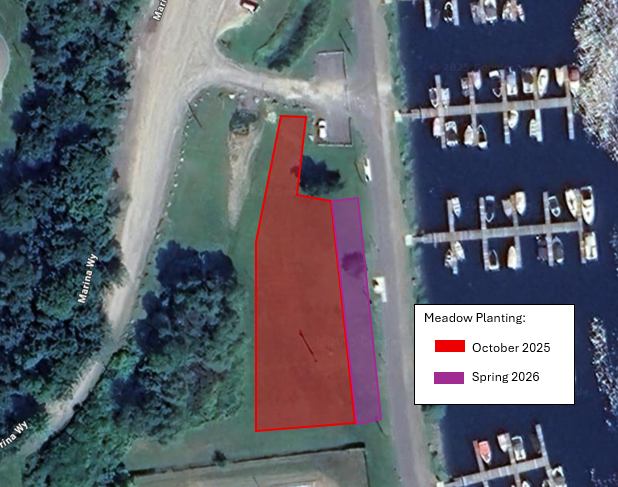
In partnership with the Canadian Wildlife Federation, we’re establishing a pollinator meadow in the marina along the waterfront trail. The seed for our meadow is a custom, native Ontario seed mix of more than 23 native grasses and wildflowers. The meadow will include 2 types of milkweed to attract breeding Monarch butterflies, which are Endangered. Monarch butterfly caterpillars feed solely on milkweed leaves.
Milkweed is a beneficial wildflower. It may have “weed” in the name, but it’s no longer considered noxious in Ontario. Milkweed is considered mildly or moderately toxic to humans and animals, but it’s also largely unpalatable.
The meadow plant community will grow and develop slowly over three years. Then it will provide critical feeding and nesting habitat for hundreds of species of pollinators, birds, and small mammals.
It’s essential for the Town of Arnprior to restore pollinator habitat because pollinators are seriously declining across North America, including Canada. The full suite of pollination services needed by our crops and ecosystems requires a diversity of pollinating species - bees, flower flies, butterflies, moths, wasps, beetles, and hummingbirds. Habitat loss, pesticide use, and climate change are the main reasons for the decline of pollinators and other beneficial insects.
The native meadows will provide beneficial natural services for the Town of Arnprior as well. Native meadow plants are more resilient to drought and flooding than ornamental plants or turf grass, and have exceptionally long roots that hold soil and prevent erosion. They also aid storm response by slowing and filtering stormwater. The deep root systems of native plants sequester more carbon in the soil than turf grass-dominated areas. Established native meadows also require less mowing, which reduces maintenance-related carbon emissions and makes meadows a climate-smart choice.
The meadow in our community will be a source of natural beauty, featuring bright native flower blooms through summer and fall.
Before we reap all the benefits of a native pollinator meadow, there's a lot of behind-the scenes work to do. Just like prepping a space before painting, how we prepare the site now will help shape and determine the success of the meadow down the road. Right now, we're focused on removing existing vegetation and loosening the soil to prepare a soft seed bed. It might not look like much, but this is one of the most important stages of habitat restoration. We're aiming to begin this work the week of October 20th.
Contact Us


